
Introduction to Racial Justice
Racial justice affects every part of our society. Empower yourself to take action and inspire others to join you in creating a more just and equitable world.

CanopyLAB
Tags
Course Description
Hey there! Are you ready to embark on a transformative journey toward understanding and supporting racial justice? This course is designed to help you explore what racial justice truly means, uncover the challenges standing in its way, and discover how YOU can play a role in building a kinder, fairer, and more equitable world. 🌟
What You’ll Learn in This Course:
- Gain a foundational understanding of racial justice, how it goes beyond just being anti-racist, and why achieving equity benefits everyone.
- Dive into the key obstacles to racial justice, including systemic racism, cultural barriers, and the role of media, laws, and policies.
- Discover practical ways to contribute to racial justice, from small personal actions to larger community efforts that promote equity and inclusion.
The journey toward racial justice starts here. By understanding what it is and how to support it, you’ll gain the tools to challenge systemic inequities, foster inclusive communities, and create meaningful, lasting change. Whether you’re just starting your journey or looking to deepen your impact, this course is for anyone who believes in a fairer future for all.
Don’t wait—enroll today and take the first step toward becoming a catalyst for positive change! 🌍✨
Units

Unit 1
What Is Racial Justice and Why Does It Matter?
What does it mean to truly achieve racial justice? It’s more than just opposing racism—it’s about creating a society where everyone, regardless of their race, has equal access to opportunities, resources, and rights. Racial justice goes beyond addressing individual bias and focuses on dismantling systemic inequities that have shaped our world for generations.
In this module, you’ll learn:
- Go beyond the idea of being "anti-racist" to understand how racial justice involves proactive efforts to create equity and inclusion.
- Learn how systemic racism shapes societal structures and affects communities in areas like education, healthcare, housing, and more.
- Explore why achieving racial equity isn’t just a moral imperative but also a key to a healthier, more prosperous, and unified society.
Racial justice is essential for addressing the root causes of inequality and ensuring that everyone has a fair chance to succeed. By understanding systemic racism and its far-reaching impact, you’ll be better equipped to contribute to meaningful change in your community and beyond. This module will provide you with the knowledge and tools to actively support racial equity and justice in your personal and professional life.
Let’s start this vital journey together—head to the materials section now to begin exploring the path toward racial equity!
Unit 2
Understanding the Challenges
Achieving racial justice is no small task. It requires us to confront and understand the deep-rooted challenges that stand in the way of equity and inclusion. From systemic barriers like wealth gaps to the subtle influence of cultural norms and misinformation, these challenges are complex but not insurmountable.
In this module, you’ll dive into:
- Learn about critical issues such as wealth inequality, misinformation, and other barriers that perpetuate racial disparities.
- Understand the differences between systemic, interpersonal, and cultural racism, and how each contributes to inequality in unique ways.
- Explore how societal institutions shape racial inequality and how they can be leveraged to create change.
You can’t solve a problem without understanding it first. By examining the key challenges to racial justice, you’ll develop the knowledge needed to identify inequities and advocate for positive change. Understanding the roots of racism and the systems that sustain it is essential for anyone who wants to help build a more just and equitable society.
Let’s confront these challenges together—head to the materials section now to begin exploring and learning!
Unit 3
What Can You Do to Support Racial Justice?
You have the power to make a difference. Supporting racial justice doesn’t always require grand gestures. It starts with everyday actions that contribute to equity and inclusion in your community and beyond. Whether it’s through educating yourself, amplifying marginalized voices, or supporting diverse businesses, every step you take matters in the fight for racial justice.
In this module, you’ll discover:
- Explore actionable steps, from small personal changes to big community initiatives, that support racial justice.
- Learn how community efforts, continued education, and supporting diverse businesses can play a key role in driving equity.
- Understand how fostering equity doesn’t just benefit individuals—it creates stronger, more inclusive communities for everyone.
Real change starts with action. By understanding how you can contribute to racial justice, you’ll gain the tools to be an active participant in creating a fairer world. Each action—big or small—sends a ripple effect that can inspire others and build momentum for lasting transformation.
Let’s get started—head to the materials section now and begin exploring the steps you can take to make a difference!
Unit 4
Black Lives Matter
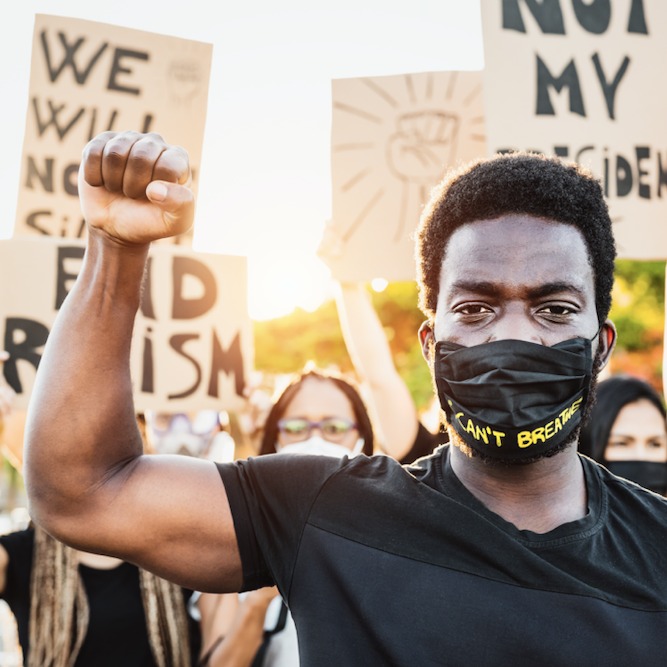
Racial justice movements have gained incredible momentum in the last few years and exploded onto the international stage in mid-2020 with protests in response to the death of George Floyd. Perhaps the most prominent symbol of this cultural moment is the hashtag #BlackLivesMatter, which can be seen all over social media and painted on walls and streets in many major cities.
When the #BLM movement began in 2013, there was immediate backlash across social media and news outlets. The hashtag was intended to raise awareness of the fact that Black lives are often treated as disposable, especially in the United States, and the murder of Black folks at the hands of the police is rarely met with as much public outrage as the murder of a white person.
However, many individuals counter #BLM with #AllLivesMatter, objecting that the issue should not be racialized and that death and police violence should be the center of the attention. Other groups use the hashtag #BlueLivesMatter to show their belief that violence is usually just and deserved. Implying that police are forced to make dangerous and deadly choices to protect themselves in the line of duty.
The videos and resources below will help you learn more about the history of the Black Lives Matter movement, its impact around the world, and the divided ways in which people relate to the movement. You will also learn to think critically about opinion pieces and other media you see online about BLM and how to build a well-informed perspective.